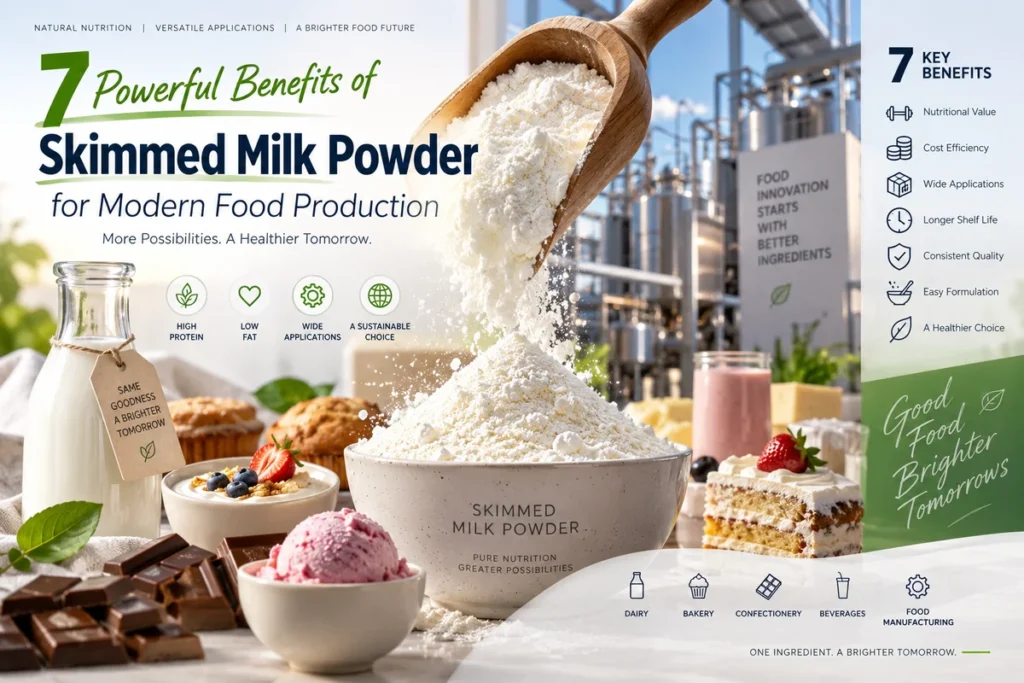
7 Powerful Benefits of Skimmed Milk Powder for Modern Food Production
Skimmed Milk Powder has become an important dairy ingredient for modern food manufacturers that require consistency, convenience, nutritional value, and efficient storage. From bakery and confectionery products to dairy foods, beverages, sauces, and prepared foods, Skimmed Milk Powder can provide concentrated milk solids without the higher milk-fat content associated with whole milk powder.
Also commonly referred to as skim milk powder or SMP, this versatile dairy ingredient is produced by removing most of the fat and water from milk. The resulting powder contains valuable milk components such as proteins, lactose, and minerals while providing manufacturers with a practical ingredient that can be stored, transported, measured, and incorporated into numerous food formulations.
For food manufacturers, distributors, importers, and professional buyers, understanding how Skimmed Milk Powder works is essential when selecting dairy ingredients for industrial production. This guide examines its production, functionality, applications, quality factors, storage requirements, and role in today's food industry.
What Is Skimmed Milk Powder?
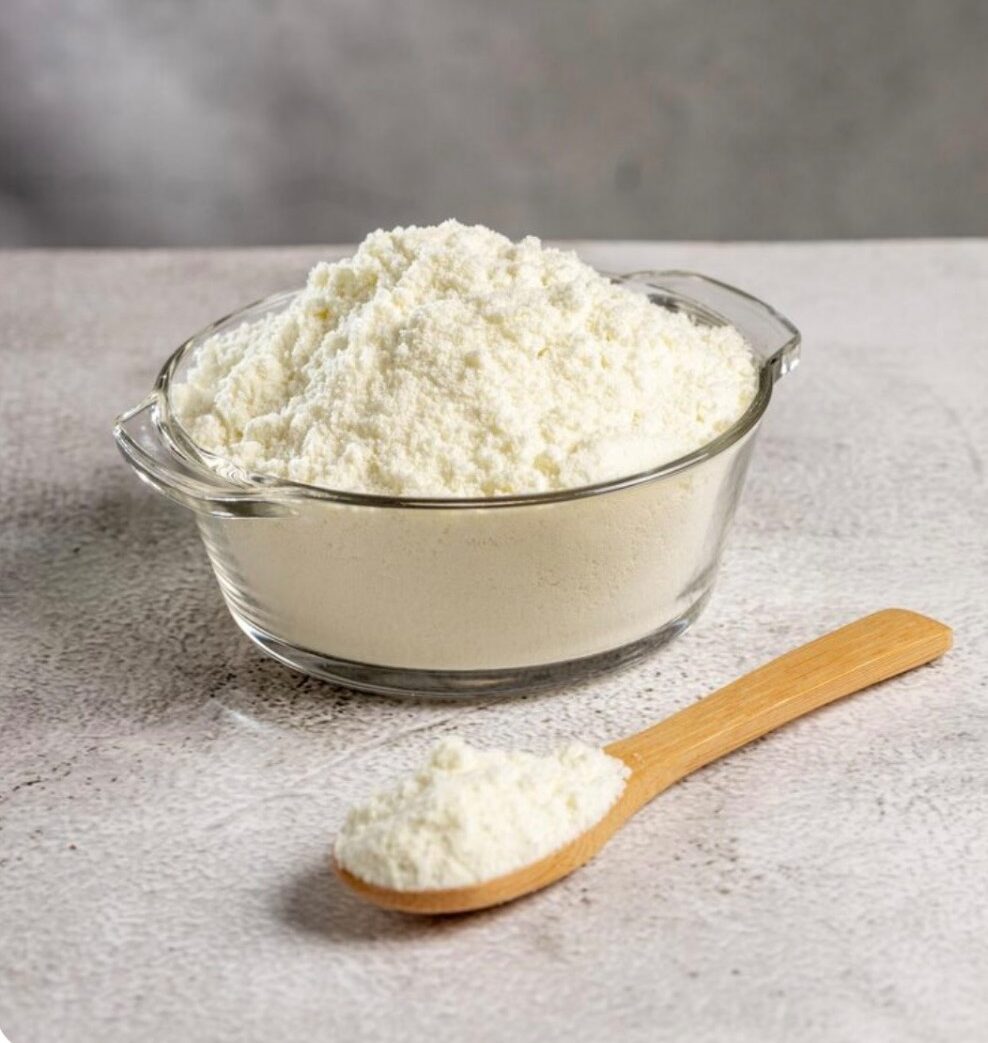
Skimmed Milk Powder is a dry dairy product manufactured from milk after most of the milk fat and water have been removed. Fresh milk naturally contains water, protein, lactose, minerals, vitamins, and fat. During processing, the cream is separated from the milk, creating skim milk with a significantly reduced fat content.
The skim milk is then concentrated and dried, commonly through spray drying, to create a stable powdered dairy ingredient. Removing most of the water reduces the weight and volume of the product while concentrating its milk solids.
This characteristic makes Skimmed Milk Powder particularly useful for industrial food production. Manufacturers can obtain dairy solids without depending exclusively on refrigerated liquid milk, while also gaining greater flexibility in storage, transportation, and formulation.
Why Is Skimmed Milk Powder Important in Food Manufacturing?
Modern food production requires ingredients that can deliver predictable performance across large production volumes. Ingredient consistency, storage efficiency, nutritional composition, processing characteristics, and supply-chain practicality can all influence purchasing decisions.
Skimmed Milk Powder addresses several of these requirements. Because it contains concentrated milk solids with relatively low milk fat, it allows manufacturers to introduce dairy components while maintaining greater control over the overall fat composition of a formulation.
Its powdered format is another important advantage. Dry ingredients can often be stored and handled more efficiently than equivalent quantities of liquid ingredients. This can be particularly useful for industrial facilities producing bakery products, confectionery, dairy foods, beverages, and dry food mixes.
How Is Skimmed Milk Powder Produced?
The production of Skimmed Milk Powder typically involves several carefully controlled stages. Exact manufacturing processes may vary according to the producer, required specification, and intended application.
1. Milk Selection and Quality Control
Raw milk is collected and evaluated according to applicable quality and food-safety requirements. Manufacturers may analyze its composition, microbiological condition, acidity, and other relevant parameters before processing.
2. Fat Separation
The milk passes through a separation process in which cream is removed. The resulting skim milk contains substantially less fat than whole milk.
3. Pasteurization
The skim milk undergoes controlled heat treatment. Pasteurization is an important stage of dairy processing and also influences certain functional properties of the finished powder.
4. Evaporation
Before drying, a significant amount of water is removed through evaporation. This creates concentrated skim milk and improves the efficiency of the subsequent drying process.
5. Spray Drying
The concentrated milk is typically atomized into fine droplets inside a spray dryer. Contact with heated air rapidly removes moisture and produces fine dried milk particles.
6. Cooling and Packaging
After drying, the powder is cooled and packaged in suitable food-grade materials. Appropriate packaging helps protect the product against moisture, contamination, odors, and environmental exposure.
What Does Skimmed Milk Powder Contain?
Because most of the water and milk fat have been removed, Skimmed Milk Powder contains concentrated milk solids. The exact nutritional composition depends on the manufacturer, processing method, origin, and individual product specification.
Milk Protein
Milk proteins represent an important component of SMP. In addition to their nutritional role, milk proteins can contribute functional properties to various food formulations.
Lactose
Lactose is the naturally occurring carbohydrate found in milk. It forms an important part of the solids in skim milk powder and may influence characteristics such as flavor and browning during food processing.
Minerals
The product naturally contains milk-derived minerals, including calcium and phosphorus. Actual nutritional values should always be confirmed using the manufacturer's technical specification and nutritional declaration.
Low Milk-Fat Content
One of the main characteristics distinguishing Skimmed Milk Powder from whole milk powder is its significantly lower milk-fat content. This allows manufacturers to obtain dairy solids while controlling fat from other ingredients separately.
Major Applications of Skimmed Milk Powder
One reason Skimmed Milk Powder is widely traded and used internationally is its versatility. Depending on its specification and the requirements of the final formulation, SMP may be used across many food categories.
Skimmed Milk Powder in Bakery Products
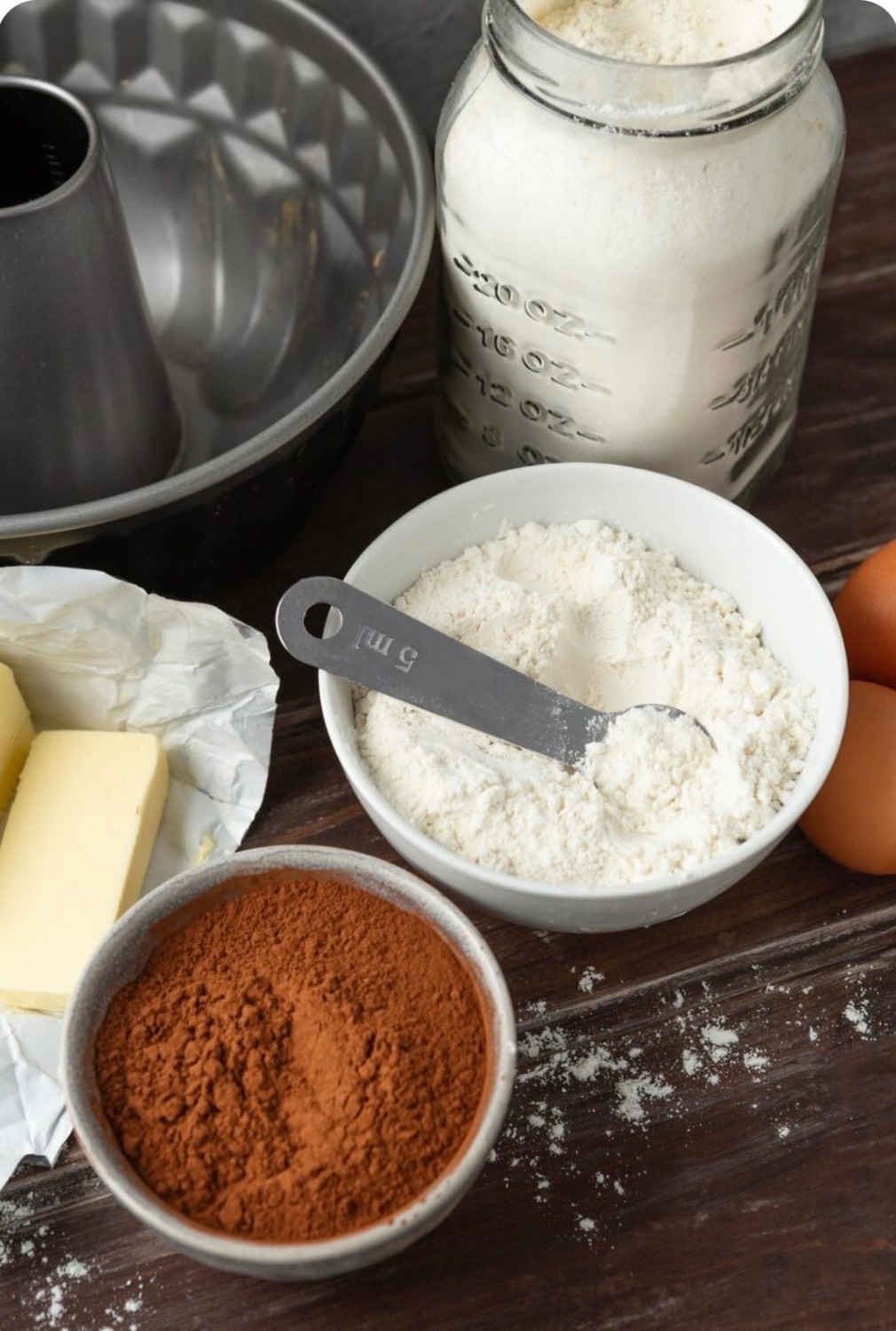
Commercial bakeries may incorporate skim milk powder into bread, biscuits, cookies, cakes, pastries, muffins, and other baked products. Milk solids can contribute to flavor, nutritional composition, texture, and browning characteristics depending on the recipe.
The powdered format is especially convenient for industrial bakeries working with standardized dry ingredient systems because the ingredient can be accurately weighed and incorporated into production batches.
Skimmed Milk Powder in Confectionery
Dairy solids are important components of many confectionery formulations. Skimmed Milk Powder may be used in selected chocolates, coatings, fillings, caramels, and other confectionery products where manufacturers need milk solids without adding the same level of milk fat provided by whole milk powder.
Skimmed Milk Powder in Ice Cream
Ice cream formulation requires careful control of fat, protein, sugar, water, and total solids. Skimmed Milk Powder can provide non-fat dairy solids and may help manufacturers adjust the balance of a formulation.
The exact amount required depends on the recipe, manufacturing process, desired texture, applicable regulations, and other ingredients used in the formulation.
Skimmed Milk Powder in Yogurt and Dairy Foods
SMP may also be used in yogurt and other dairy formulations. Depending on the product and applicable food standards, manufacturers may use it to adjust milk solids and protein levels or to achieve specific processing objectives.
Skimmed Milk Powder in Beverages
Powdered dairy ingredients can be used in milk-based beverage mixes, instant beverages, nutritional formulations, and other drink applications. Their dry format can simplify transportation and storage while allowing manufacturers to reconstitute or formulate products when required.
Skimmed Milk Powder in Sauces and Prepared Foods
Certain soups, sauces, ready meals, dry mixes, and prepared food products can also contain Skimmed Milk Powder. In these applications, dairy solids may contribute to flavor, nutritional composition, and formulation performance.
7 Powerful Benefits of Skimmed Milk Powder for Manufacturers
1. Concentrated Dairy Solids
Skimmed Milk Powder provides concentrated dairy solids in a convenient powdered format. This can help manufacturers incorporate important milk components into a variety of industrial food formulations.
2. Efficient Storage
Removing most of the water from milk creates a concentrated dry product. When properly packaged and stored according to supplier recommendations, Skimmed Milk Powder can offer practical storage advantages compared with fresh liquid milk.
3. Transportation Efficiency
Liquid milk contains a substantial amount of water. Transporting dry milk solids instead can reduce the amount of water that must be moved through the supply chain.
4. Accurate Ingredient Dosing
Industrial manufacturers require repeatable formulations. Skimmed Milk Powder can be accurately weighed as part of a standardized production process, supporting consistency between production batches.
5. Greater Control Over Fat Levels
Because SMP contains relatively little milk fat compared with whole milk powder, formulators have greater flexibility to manage fat using other ingredients according to the requirements of the final product.
6. Multiple Food Applications
A single category of dairy ingredient can serve bakery, dairy, confectionery, beverage, dessert, and prepared-food applications. This versatility makes SMP an important ingredient for many food manufacturing operations.
7. Standardized Food Formulation
The powdered format makes Skimmed Milk Powder suitable for accurately measured industrial formulations. When manufacturers select the appropriate specification for their intended application, SMP can support repeatable production processes and consistent ingredient management.
Skimmed Milk Powder vs. Whole Milk Powder
The main difference between Skimmed Milk Powder and whole milk powder is the amount of milk fat retained in the finished product. Whole milk powder contains considerably more milk fat, while SMP is manufactured after most of the cream has been separated from the milk.
This difference affects nutritional composition, flavor, storage behavior, formulation, and industrial applications.
| Characteristic | Skimmed Milk Powder | Whole Milk Powder |
|---|---|---|
| Milk Fat | Low | Higher |
| Dairy Solids | Concentrated non-fat milk solids | Milk solids including higher milk fat |
| Typical Selection | Useful when greater control over formulation fat is required | Useful when milk fat is an important part of the formulation |
| Applications | Bakery, dairy, beverages, confectionery and prepared foods | Confectionery, dairy, beverages and other formulations |
Neither ingredient is universally better. The appropriate choice depends on the formulation, desired nutritional profile, flavor, processing requirements, cost considerations, and final product specifications.
What Should Buyers Check When Purchasing Skimmed Milk Powder?
Professional buyers should evaluate more than price when sourcing Skimmed Milk Powder. Technical characteristics can influence processing performance and suitability for specific applications.
Important purchasing considerations may include:
- Protein content
- Milk-fat content
- Moisture level
- Lactose content
- Solubility
- Microbiological specifications
- Heat classification
- Country of origin
- Manufacturing standards
- Food-safety certifications
- Packaging format
- Shelf life
- Storage requirements
- Minimum order quantity
- Supply consistency
For industrial applications, buyers should request an up-to-date technical data sheet, certificate of analysis where appropriate, and other relevant product documentation from the supplier.
What Is Low-Heat, Medium-Heat, and High-Heat Skimmed Milk Powder?
Not every Skimmed Milk Powder has identical functional properties. Heat treatment during manufacturing can influence milk proteins and therefore affect how the ingredient behaves in certain applications.
SMP is commonly discussed using classifications such as low heat, medium heat, and high heat. These classifications are relevant to professional buyers because different food applications may require different functional characteristics.
Instead of choosing a powder based only on price, manufacturers should match the specification and heat classification to the intended application and processing conditions.
How Should Skimmed Milk Powder Be Stored?
Proper storage is essential for maintaining the quality of Skimmed Milk Powder. Because milk powder is a dry ingredient, exposure to moisture can negatively affect its physical characteristics and overall quality.
Products should be stored according to the manufacturer's instructions, typically in appropriate dry conditions and protected from excessive heat, moisture, direct sunlight, contamination, and strong odors.
Packaging should remain properly sealed until use. After opening, manufacturers and foodservice operators should follow the supplier's handling and storage recommendations.
The shelf life of a particular product should never be assumed from general information about milk powder. Always refer to the shelf life, storage instructions, and best-before information supplied for the specific product.
Why Quality Matters When Choosing Skimmed Milk Powder
The performance of Skimmed Milk Powder can vary depending on milk quality, processing conditions, heat treatment, moisture, composition, storage, and other technical factors.
For this reason, professional food manufacturers generally evaluate technical specifications alongside commercial considerations. A lower purchasing price does not necessarily mean that two milk powders will provide identical performance in a particular formulation.
Manufacturers should define the functional and technical requirements of their finished product first and then select an SMP specification capable of meeting those requirements.
Skimmed Milk Powder in the Modern Food Supply Chain
Global food manufacturing increasingly depends on ingredients that can be transported efficiently and incorporated into standardized production systems. Dairy powders help make this possible by converting perishable liquid milk into a concentrated ingredient suitable for a broad range of commercial applications.
Skimmed Milk Powder is particularly useful when manufacturers need dairy proteins and other milk solids while maintaining greater control over milk fat.
Its versatility across bakery, dairy, confectionery, beverages, ice cream, and prepared foods explains why SMP remains an important ingredient within international dairy trade and industrial food manufacturing.
Frequently Asked Questions About Skimmed Milk Powder
1. What is Skimmed Milk Powder?
Skimmed Milk Powder is a dry dairy ingredient manufactured from milk after most of the milk fat and water have been removed. It contains concentrated non-fat milk solids, including milk proteins, lactose, and naturally occurring minerals.
2. Is skim milk powder the same as Skimmed Milk Powder?
The terms skim milk powder and Skimmed Milk Powder are generally used for the same type of dairy ingredient. The preferred terminology can vary between countries and markets. SMP is a common industry abbreviation.
3. What is Skimmed Milk Powder used for?
Skimmed Milk Powder is used in bakery products, dairy foods, confectionery, ice cream, beverages, sauces, dry mixes, and various processed food formulations.
4. Why do food manufacturers use Skimmed Milk Powder?
Food manufacturers use SMP because it provides concentrated dairy solids in a convenient dry format. It can support standardized ingredient dosing, efficient storage, transportation, and greater control over the fat content of food formulations.
5. Does Skimmed Milk Powder contain protein?
Yes. Skimmed Milk Powder naturally contains milk protein. The exact protein content depends on the individual product and should be confirmed from the manufacturer's technical specification or nutritional declaration.
6. What is the difference between Skimmed Milk Powder and whole milk powder?
The primary difference is milk fat. Skimmed Milk Powder contains significantly less milk fat, while whole milk powder retains a higher proportion of milk fat. This difference affects nutritional composition, flavor, storage characteristics, and food formulation.
7. Can Skimmed Milk Powder be used in bakery products?
Yes. SMP is commonly used in commercial bakery formulations, including selected breads, cakes, biscuits, cookies, pastries, and other baked products.
8. Can Skimmed Milk Powder be used for ice cream?
Yes. Skimmed Milk Powder can be used as a source of non-fat dairy solids in ice cream and frozen dessert formulations. The required amount and specification depend on the complete recipe and manufacturing process.
9. How should Skimmed Milk Powder be stored?
It should be stored according to the supplier's instructions and protected from moisture, excessive heat, contamination, direct sunlight, and strong odors. Packaging should also be kept properly sealed.
10. How do I choose the right Skimmed Milk Powder for food manufacturing?
Consider the intended application as well as protein, moisture, fat, solubility, microbiological parameters, heat classification, origin, certifications, packaging, shelf life, and supplier reliability. Professional buyers should review the technical specification before placing an industrial order.
Conclusion: Why Skimmed Milk Powder Remains an Essential Dairy Ingredient
Skimmed Milk Powder combines the nutritional and functional characteristics of milk solids with the convenience of a dry, concentrated dairy ingredient. Its low milk-fat content, versatility, storage practicality, and compatibility with multiple food applications make it an important ingredient for modern food manufacturing.
From bakery and confectionery production to dairy products, beverages, ice cream, sauces, and prepared foods, SMP provides manufacturers with flexibility when developing and standardizing formulations.
However, selecting the right Skimmed Milk Powder requires more than choosing a supplier or comparing prices. Protein, moisture, heat classification, solubility, microbiological quality, packaging, certifications, shelf life, and the intended food application should all be considered.
For professional buyers, the most effective approach is to define the required technical characteristics first and then compare available Skimmed Milk Powder specifications against the requirements of the finished product.